Prerna Jagga
 15 Jun 2026

In enterprise operations, it’s a common misconception that revenue leaks only happen in marketing or sales conversion funnels. In reality, one of the most severe drains on corporate profitability occurs right under the noses of executive leadership: the contract lifecycle.
According to a worldwide study conducted by the World Commerce & Contracting (WCC) organisation, poor contract management and inefficient execution cost the typical firm 8.6% to 9% of its yearly income. For a billion-dollar company, this amounts to a startling $90 million in losses from the bottom line each year.
This financial erosion typically doesn’t result from a poorly negotiated deal. Instead, it happens during the “final mile”—the critical transition between final approval and secure execution. When contract signing is fragmented, manual, or insecure, deals stall, compliance failures mount, and operational costs skyrocket.
To stop this drain, forward-thinking enterprises are optimising execution. Jupitice Contract Lifecycle Management (CLM) directly solves this challenge, transforming secure contract signing and execution from a bureaucratic hurdle into an automated engine for revenue protection.
Where the Leak Actually Starts: The Execution Gap
The majority of corporations believe contract risk is managed through terms, service-level agreements, and indemnities. These are significant. However, contracts become legally enforceable upon execution, a process fraught with silent failure points.
Version uncertainty: A contract is revised six times over email. By the time someone signs, no one is certain which version is final. Courts require the executed version to be definitive. Without version control, you’re building your legal position on sand.
Identity gaps. Who actually signed? An email thread doesn’t prove identity. A scanned PDF with a signature image proves even less. In a dispute, the burden of proving who signed what falls on you.
Post-execution tampering. An unencrypted PDF can be edited after signing. Without cryptographic locking, there is no reliable proof that the document today matches the document that was signed.
Missing audit trails. No timestamp. No IP record. No signing sequence log. When a vendor defaults or a procurement clause is disputed, “we think they signed it around October” is not a legal position.
Signing delays are costing revenue. For sales contracts, delays between the request stage and the onboarding of a signed contract prevent deals from being recognised in a given quarter — pushing revenue into the next quarter and resulting in lower sales numbers that reflect an inefficient process. Every day a contract sits unsigned is a day revenue isn’t recognised.
A Real-World Scenario: The ₹2 Crore That Wasn’t Provable
Consider a mid-sized logistics company in India. They onboarded a new technology vendor for warehouse automation — a ₹2 crore agreement. The contract is drafted, negotiated over email, and “signed” by sending a scanned copy as an attachment. The vendor begins work.
Eight months later, the vendor disputes Clause 7 — the penalty clause for delivery delays. They claim that a different version of the contract, one without the penalty clause, was the one they agreed to. The enterprise’s legal team scrambles. They have six versions of the contract in inboxes across three departments. None is definitely the executed version. The audit trail is an email chain. The vendor’s legal team knows this.
Settlement costs: ₹38 lakh.
Time lost in dispute: 5 months.
Revenue impact from project delays: unquantified.
This isn’t an imaginary edge case. According to the Journal of Contract Management, 71% of businesses are unable to find at least 10% of their contracts, and lost or unverifiable contracts immediately result in fines, unenforceable provisions, and missed renewals.
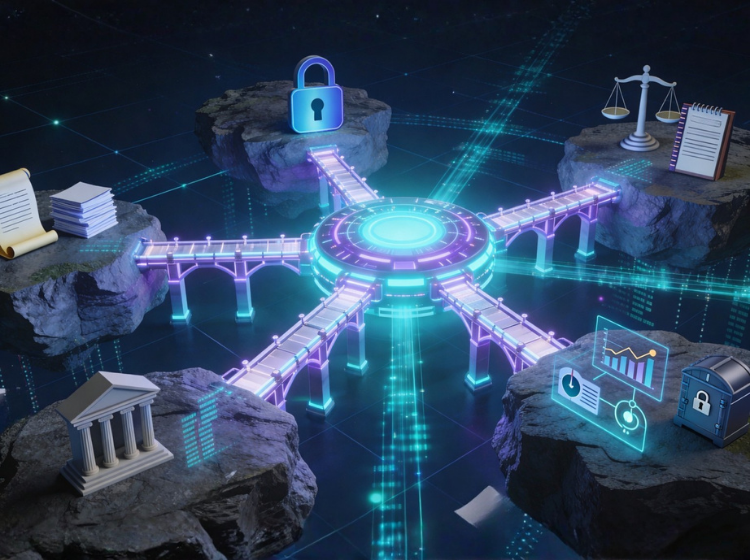
A legal tech platform like Jupitice provides legal, procurement, finance, and business teams with a single secure environment to manage final versions, approvals, signatures, audit trails, and executed contracts.
What Secure Contract Signing Actually Means in a CLM Context
Signing a contract securely is not just attaching a signature. It is a structured, auditable, legally defensible transaction. Jupitice CLM’s Secure Contract Signing & Execution feature is built around exactly this, not as a utility add-on, but as a core pillar of contract integrity.
Here is what the CLM platform delivers in practice:
1. Legally Valid Digital Signatures Under India’s IT Act
Under India’s Information Technology Act, 2000, Sections 85A and 85B create statutory presumptions of authenticity for secure digital signatures — making them legally valid and enforceable, and conferring strong evidentiary weight in dispute resolution.
Jupitice CLM platform’s signing workflow is built in compliance with this framework. Every executed contract carries the same legal standing as a wet-ink signature — admissible in Indian courts, enforceable in arbitration, and aligned with the country’s growing regulatory mandate toward digital execution.
2. Tamper-Proof Encryption at Execution
The moment a contract is signed on Jupitice contract lifecycle management, it is cryptographically locked. Any post-execution change — however minor — is immediately detectable. This directly plugs the 2–3% revenue leakage attributed to unauthorised or unrecorded changes.
For a ₹100 crore annual contract portfolio, that alone recovers ₹2–3 crore in value annually.
This is one of the biggest advantages of legal tech-led contract execution: it not only digitalises signatures; it also protects the commercial intent behind the contract.
3. Multi-Party Sequential Signing — With No Way to Skip the Queue
Real enterprise contracts involve multiple signatories: the counterparty, the legal head, the CFO, and sometimes external counsel. Jupitice Contract Lifecycle Management System allows configurable sequential or parallel signing workflows. No signatory can be bypassed. No document advances without the right authorisation at the right stage.
Practical example: A BFSI enterprise issuing loan agreements to corporate clients requires sign-off from the client’s authorised signatory, their internal credit head, and compliance officer — in sequence. Jupitice CLM enforces this automatically, sends staged reminders, and flags any bottleneck in real time.
This is how legal tech helps enterprises replace manual follow-ups with governed execution.
4. Complete, Court-Ready Audit Trails
Every signing event is logged: who signed, when, from which IP, in what sequence, on which version of the document. This audit trail is generated automatically and is immutable.
When a dispute arises — and in enterprise B2B, it eventually does — this trail is the difference between a defensible legal position and an expensive settlement.
5. Faster Execution = Faster Revenue Recognition
Enterprises using a contract lifecycle management system report an average cycle time of 80% faster from bid to signed agreement. In enterprise contexts where deals run into crores and quarters are measured by closed contracts, this is a direct revenue-acceleration lever.
Automation of contract management processes accelerates negotiation cycles by 50% and reduces inaccurate payments by 75–90%. Secure, streamlined signing is the final bottleneck — removing it moves revenue into the current quarter rather than the next.
The Bottom Line
Contracts serve as the financial foundation for your business partnerships and are more than just legal documents. Enterprise margins are directly impacted by the friction of managing them across separate technologies.
Businesses that use Jupitice Contract Lifecycle Management Platform report a 40% decrease in legal risks and full, 100% insight into ongoing responsibilities. As a Legal Tech Company, Jupitice Justice Technologies lets you permanently stop the income leak by encrypting the final signature process with enterprise-grade encryption, automating workflow routing, and enabling instantaneous post-execution AI analysis.
Stop letting operational friction dilute your financial performance. Turn your contract pipeline into a highly secure asset that accelerates business velocity.
👉 Discover how Jupitice CLM can safeguard your bottom line. Book a free demo today.
Sources: World Commerce & Contracting (WCC) Contract Management Whitepaper, August 2025, Information Technology Act, 2000 (India) — Sections 85A & 85B, Journal of Contract Management