Prerna Jagga
 10 Mar 2026

Inside the high-stakes boardroom of 2026, compliance is no longer a “back-office” box-ticking exercise. It has evolved into a core strategic pillar. With global financial regulators shifting from advisory guidelines to prescriptive enforcement, particularly around AI and ESG, the cost of “getting it wrong” has reached an all-time high.
According to 2026 industry benchmarks, the average cost of non-compliance for large enterprises has spiked by 13% year-on-year, with data-related breaches in territories like India now averaging £2.2 million (INR 22 Crores) per incident.
For the modern Chief Compliance Officer (CCO), the challenge is “Regulatory Velocity”- the fast pace at which laws change. Traditional, fragmented tracking via spreadsheets is no longer simply inefficient; it is a liability. Enter Jupitice Enterprise Compliance Management System (CMS): the AI-powered ecosystem changing how enterprises pilot this volatile landscape.
The Compliance Challenge Enterprises Face Today
Compliance leaders across industries face a common collection of challenges:
Fragmented Compliance Tracking
Many organisations manage compliance obligations across multiple departments, geographies, and regulatory authorities. Without a centralised system, critical statutory deadlines may be easily missed.
Manual Regulatory Reporting and Documentation
Compliance teams often spend significant time manually compiling reports. This slows down response times and creates inconsistencies during regulatory audits.
Lack of Audit Trails & Real-Time Visibility
For board members and CXOs, understanding the organisation’s compliance health can be difficult when information is scattered among departments.
Rising Regulatory Complexity
Industries such as banking, insurance, healthcare, and telecom must comply with multiple regulatory systems simultaneously. Manually monitoring regulatory notifications is inefficient and risky.
The Rise of AI-Powered Compliance Automation
Artificial intelligence is rapidly changing how enterprises manage regulatory obligations.
Modern compliance platforms now leverage AI to:
- Automate regulatory tracking and updates
- Assign and monitor compliance tasks throughout departments.
- Forecast possible compliance risks.
- Generate real-time dashboards for leadership teams.
- Simplify audit preparation through automated documentation.
This shift is notably important for large enterprises and BFSI institutions, where hundreds of statutory requirements must be tracked simultaneously.
According to Gartner, 40% of enterprise AI platforms will be integrated with task-specific AI agents by the end of 2026, up from less than 5% today.
Jupitice CMS: A Unified Platform for Enterprise Compliance
Jupitice’s Enterprise Compliance Management System is a single, AI-powered platform designed to automate the whole compliance lifecycle, not simply a digital filing cabinet. It transforms compliance from a reactive burden into an active benefit by digitising every touchpoint, from obligation mapping to automated evidence filing.
- Centralised Legal & Compliance Registers
Forget digging through email threads for the latest statutory update. Jupitice provides a Centralised Legal Register that consolidates all global and local obligations. It assures every stakeholder, from the Board to the Branch Manager, is working from the same live data.
- AI-Powered “Saya” Intelligence
At the heart of Jupitice is Saya, an AI engine that moves beyond simple alerts.
- Contextual Q&A: Query elaborate regulatory documents in plain language.
- Predictive Risk: Saya proactively identifies potential compliance delays before they turn into regulatory breaches, flagging tasks approaching limitation periods.
- Pattern Recognition: It groups similar compliance requirements across geographies to eliminate redundant work.
- Automated Workflows & Remediation
The Remediation Register steps in when an audit identifies a gap. To ensure you have a tamper-proof audit trail when regulators arrive, it automatically assigns remedial actions, monitors progress, and archives data.
Enterprises deploying automated compliance systems have reported measurable improvements, such as:
- Up to 90% reduction in missed compliance deadlines
- 60% faster compliance reporting and audit preparation
- 100% visibility and accountability into compliance status across departments
- Significantly lowered exposure to regulatory penalties.
Impact Across Major Sectors
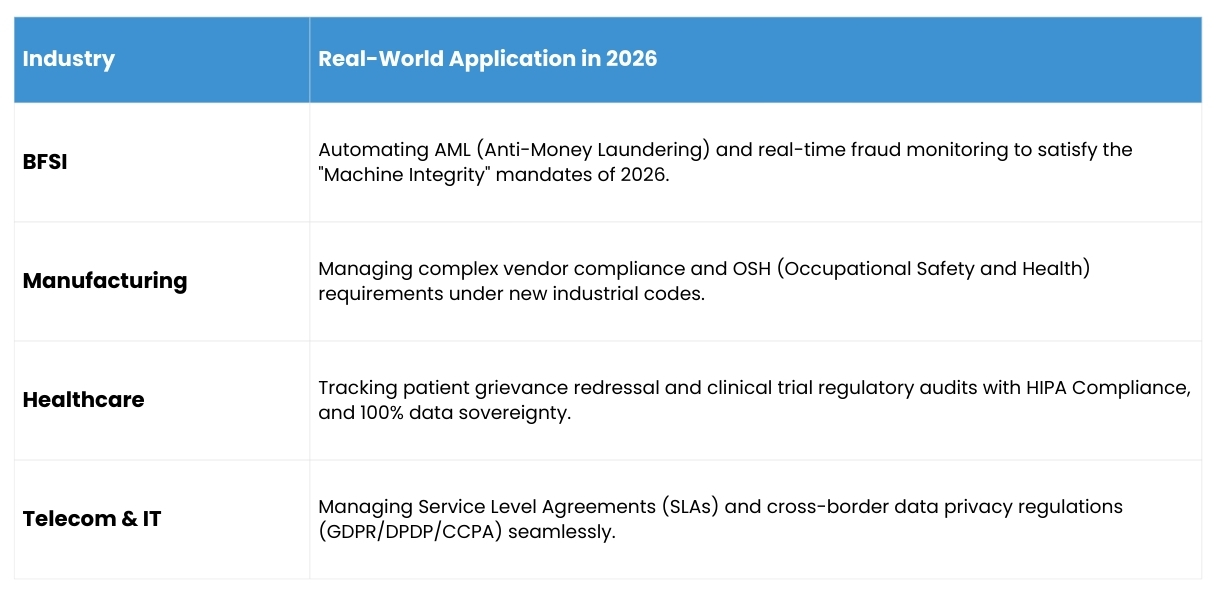
While our enterprise compliance management system is a powerhouse for the BFSI sector (Banks, NBFCs, and Fintechs), its enterprise-grade architecture scales across industries:
The Future of Enterprise Compliance in 2026
The era of “hands-on oversight” is over. As we move further into 2026, the intricacy of global trade and digital law requires a system that thinks as fast as the regulators do. By automating regulatory workflows, centralising compliance data, and delivering instant insights, organisations are able to transform compliance into an anticipatory, intelligence-driven function.
In an era when regulatory expectations evolve faster than ever, enterprises need systems that move at the speed of compliance. Products like Jupitice Compliance Management System enable organisations to shift from reactive regulatory management to active governance—transforming compliance from a cost centre into a competitive advantage.
[ Sources: Gartner Predicts 40% of Enterprise Apps Will Feature Task-Specific AI Agents by 2026, Up from Less Than 5% in 2025, https://www.ndtv.com/india-news/india-data-breach-costs-reach-new-record-level-of-22-crores-report-9037094 ]