Editorial Team
 30 Dec 2025

Mediation and Lok Adalats were designed to make justice more accessible. They reduce delay, ease court burden, and allow disputes to be resolved through dialogue rather than prolonged litigation. Over time, these mechanisms have become an essential part of India’s justice delivery framework.
However, as their scale and importance grow, a new challenge has emerged. Mediation and Lok Adalats today are expected to handle large volumes of cases, involve multiple stakeholders across geographies, and operate within clearly defined legal and procedural boundaries. In such an environment, relying on fragmented digital tools or partially digitised processes is no longer sufficient.
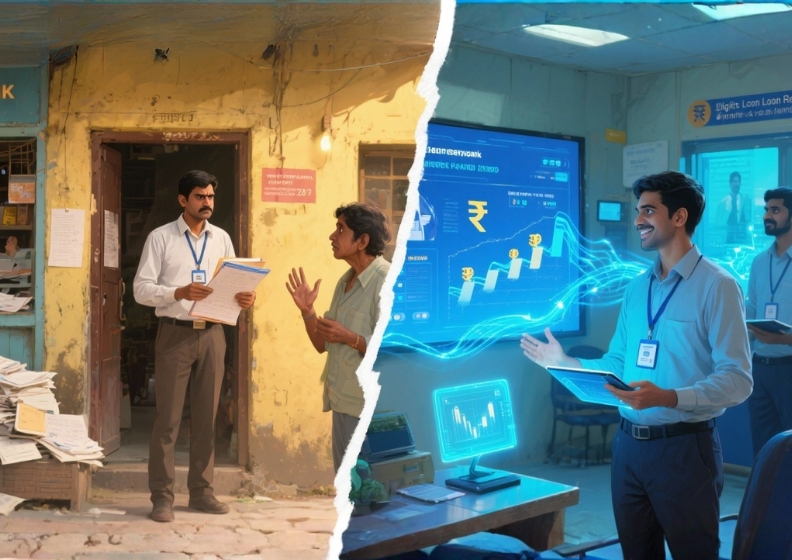
The focus is now shifting from digitising individual steps to designing the process as a whole. This means building processes that are institutionally supervised, procedurally consistent, and capable of operating at scale. What is now required are end-to-end digital systems that support mediation and Lok Adalat proceedings as structured, institutionally governed processes.
In this blog, we will examine why this shift is becoming unavoidable, and why mediation and Lok Adalats can no longer rely on fragmented digital tools to meet institutional expectations. Let’s have a look!
Why Digital Tools Alone Are No Longer Sufficient
Across jurisdictions, digital adoption in mediation and Lok Adalats often begins with convenience. Online filings, virtual hearings, electronic communication, and document uploads have become common. While these steps improve access, they do not always work together as one connected process.
In practice, many processes remain disconnected! Case filing happens in one system, scheduling in another, and documents are mostly exchanged through multiple channels. In short, data remains scattered and difficult to analyse, and oversight depends heavily on manual coordination.
As volumes increase, these gaps begin to affect efficiency, consistency, and transparency. What starts as minor coordination issues gradually becomes a systemic challenge. And, end-to-end digital systems address this problem by connecting every stage of the mediation and Lok Adalat lifecycle into a single, governed workflow.
“They allow institutions to manage not just individual cases, but the system as a whole.”
What an End-to-End System Changes
An end-to-end digital system is not just about moving processes online. It is about redesigning how mediation and Lok Adalat proceedings function within an institutional framework.
Such systems support the entire journey, from case initiation and scrutiny to scheduling, hearings, settlement drafting, reporting, and closure. They preserve auditability, ensure procedural consistency, and allow judicial and administrative authorities to maintain oversight without slowing down resolution.
This shift, from isolated digital steps to system-led processes, is increasingly visible in how the judiciary is engaging with technology.
A Judicial Example of System-Led Thinking
This evolving approach was reflected during a Judicial Conclave held in Jaisalmer, organised by the National Judicial Academy in collaboration with the Rajasthan High Court. The two-day conference brought together judges from across the country to deliberate on contemporary challenges facing the judiciary, including the role of technology, artificial intelligence, and institutional coordination in strengthening justice delivery.
Within this broader discussion, the 𝐀𝐈-𝐛𝐚𝐬𝐞𝐝 𝐉𝐮𝐝𝐢𝐜𝐢𝐚𝐥 𝐎𝐃𝐑 – 𝐃𝐢𝐠𝐢𝐭𝐚𝐥 𝐌𝐞𝐝𝐢𝐚𝐭𝐢𝐨𝐧 𝐏𝐥𝐚𝐭𝐟𝐨𝐫𝐦 𝐚𝐧𝐝 𝐃𝐢𝐠𝐢𝐭𝐚𝐥 𝐋𝐨𝐤 𝐀𝐝𝐚𝐥𝐚𝐭 𝐏𝐥𝐚𝐭𝐟𝐨𝐫𝐦, developed by Jupitice Justice Technologies, were featured as an illustration of how mediation and Lok Adalat processes can be supported through structured digital systems.
The conclave was inaugurated by the Hon’ble Chief Justice of India, Justice Surya Kant, and attended by 23 Judges of the Supreme Court of India and over 70 Judges from various High Courts, along with the Hon’ble Chief Justice of the Rajasthan High Court. The platforms were presented by Hon’ble Mr Justice Pushpendra Singh Bhati, Judge, Rajasthan High Court, reinforcing the importance of institutionally guided digital justice systems.
How End-to-End Systems Support Modern Mediation
The value of an end-to-end system becomes particularly clear when mediation is examined closely. Mediation is designed to be flexible and participatory, but flexibility without structure can lead to inconsistency and procedural risk.
This is where a purpose-built digital platform becomes essential. Jupitice’s Digital Mediation Platform is designed to support mediation proceedings through a single, secure, institutionally governed environment. Here are its key capabilities:
- AI-Assisted Case Filing with Multilingual Support
Enables easy case filing while securely centralising all case details, communications, and documents on a single platform.
- Bulk Scheduling & Remote Mediation Sessions
Allows seamless scheduling and management of multiple mediation matters, with fully remote mediation sessions accessible to all participants, irrespective of location.
- AI-Assisted Settlement Agreement Drafting
Automatically generates settlement agreements, reducing drafting time and errors.
- Built-in Data Analytics & Reporting
Provides state-wide, customizable analytics and reports to track mediation sessions, outcomes, and efficiency.
These capabilities support mediators and institutions by reducing procedural burden while preserving oversight and legal accuracy.
Built as Foundational Infrastructure for Justice Systems
Justice is at the core of Jupitice’s 𝐀𝐈-𝐛𝐚𝐬𝐞𝐝 𝐉𝐮𝐝𝐢𝐜𝐢𝐚𝐥 𝐎𝐃𝐑 – 𝐃𝐢𝐠𝐢𝐭𝐚𝐥 𝐌𝐞𝐝𝐢𝐚𝐭𝐢𝐨𝐧 𝐏𝐥𝐚𝐭𝐟𝐨𝐫𝐦 𝐚𝐧𝐝 𝐃𝐢𝐠𝐢𝐭𝐚𝐥 𝐋𝐨𝐤 𝐀𝐝𝐚𝐥𝐚𝐭 𝐏𝐥𝐚𝐭𝐟𝐨𝐫𝐦. In fact, these platforms have been conceptualised and developed as a foundational digital infrastructure for justice delivery.
The platform functions like an operating system for mediation, Lok Adalats, ADR centres, and other justice mechanisms. It allows institutions to design and operate end-to-end workflows using configurable components, instead of relying on disconnected applications.
Within this framework, the Digital Mediation Centre translates infrastructure into practice. It supports the complete mediation lifecycle, including online filing, automated scrutiny, appointment of mediators, joint and separate sessions, drafting and execution of mediated settlement agreements, reporting, and closure, all within a single governed system.
To sustain this lifecycle with accuracy and trust, the platform integrates advanced yet controlled digital capabilities. AI-assisted document generation, real-time transcription and translation, digital signatures, blockchain-based digital lockers, and structured dashboards strengthen confidentiality, traceability, and institutional oversight at every stage.
Proven at Institutional Scale
The emphasis on system-led justice is not theoretical since Jupitice’s platforms are already operating within formal institutional environments.
At an institutional level, Jupitice has engaged with over 3,700 institutions, supported more than 23 million cases, and enabled the generation of over 1.8 million awards, demonstrating the ability to support justice delivery at scale.
This scale reinforces an important point: when mediation and Lok Adalats operate at the population level, systems must be designed for consistency, visibility, and governance, not just convenience.
Designing the Future of Mediation and Lok Adalats
Mediation and Lok Adalats are no longer supplementary mechanisms; they are central to the efficient and inclusive delivery of justice in India.
While fragmented digitisation may have been a necessary starting point, it is no longer sufficient as the role of mediation and Lok Adalats continues to expand. As expectations around scale, consistency, and oversight grow, the systems that support them must evolve accordingly. End-to-end digital systems are therefore essential to preserve trust, ensure accountability, and enable scale.
“So, the direction is clear that Justice delivered at scale must be designed as a system.”
Learn More About Platform-Led Digital Justice
Jupitice continues to work with the judiciary, legal services authorities, governments, ADR centres, and institutions to build structured, secure, and institutionally governed digital justice systems.
To explore how end-to-end digital mediation and Lok Adalat systems are being designed and implemented, visit www.jupitice.com!